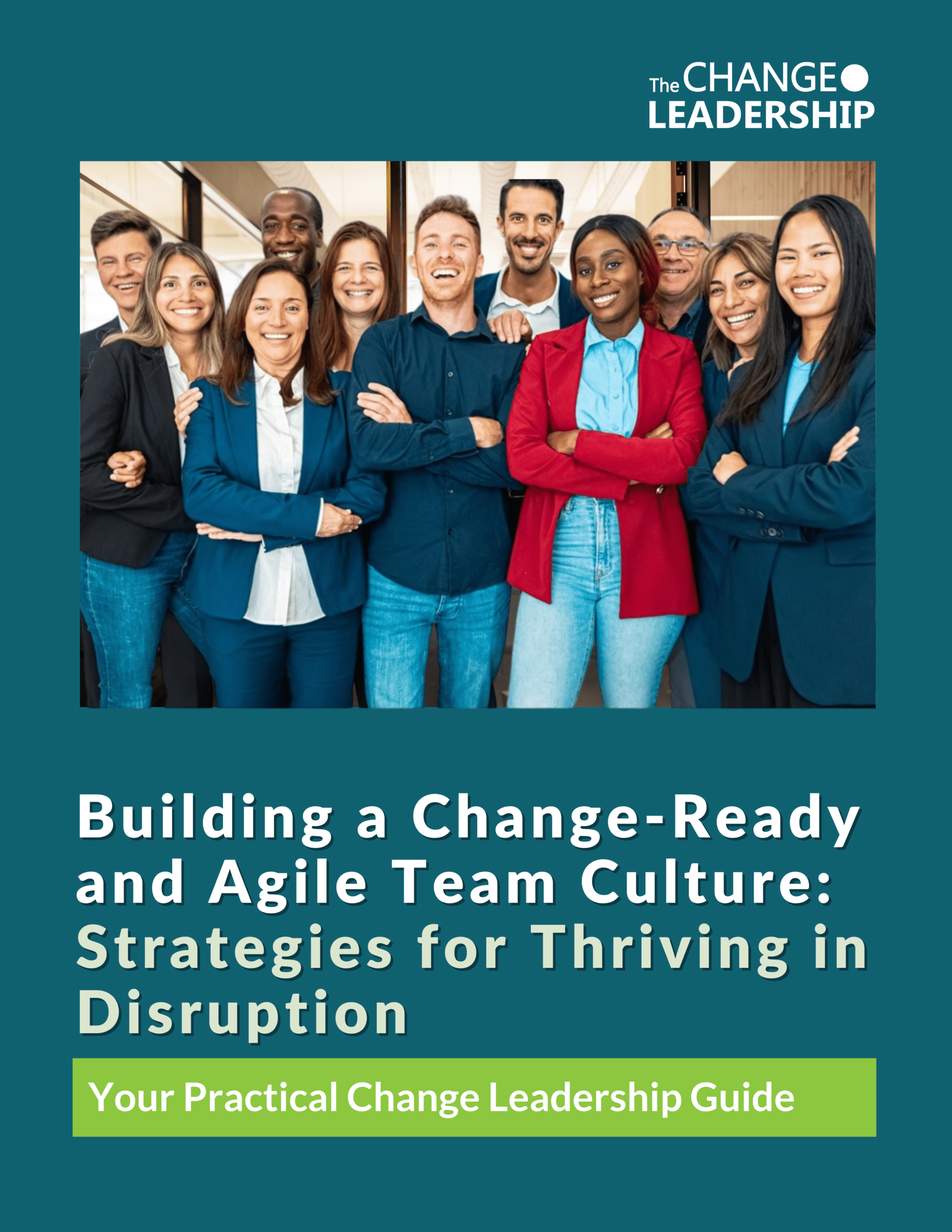
Everyone Owns Change. Can Everyone Lead It?

“Change is everyone’s responsibility.”
I hear versions of this statement in leadership conversations and on conference stages. It sounds empowering. It suggests that change is not something a specialist team does to everyone else, but something people across an organization contribute to.
I agree with the principle, but responsibility is the easy part to distribute.
The harder question is this: If everyone is responsible for change, what have we given everyone to help them lead it?
Too often, we assign expectations and responsibilities without giving people the skills, decision-making authority, time or support to meet them. Then, when progress stalls, we question their commitment or label them as incompetent or resistant.
We have made change everyone’s responsibility, but we have not necessarily made everyone capable of contributing to it.
Imagine telling everyone involved in building a house that they are responsible for completing it, but only giving the contractors the plans, tools and authority to make decisions. Everyone may be accountable for the outcome, but not everyone has been equipped to contribute meaningfully.
Organizations are no different.
Responsibility is not the same as capability
Four concepts matter when we talk about building the capability to lead change. They are often used interchangeably, but they describe very different things.
- Responsibility is the work or role someone is expected to take on.
- Accountability is the obligation to answer for a decision or outcome.
- Capacity is the time, resources, energy and authority available to do it.
- Capability is the knowledge, skills, judgement and confidence needed to do the work.
Consider a manager who is expected to lead their team through the introduction of a new system. They may be responsible for supporting adoption and accountable for the team’s results. But have they been equipped to respond when employees question the change? Do they know how to address concerns, adapt team workflows and manage the transition while maintaining business performance? Have they been given the time to coach their people? Can they make decisions about how the new process is introduced, or must every adjustment be escalated?
If not, there is a gap. Naming someone responsible does not close it.
Why does “everyone owns change” so often fall short?
The problem arises when organizations distribute responsibility without clearly defining the authority and capability people need to act.
Take an organization introducing a new way of resolving customer issues. Frontline employees understand the customer experience and see operational problems first. Their managers understand the daily pressures on their teams. Senior leaders control budgets, policies and organizational priorities. Each group has a different perspective and a different contribution to make.
But what happens when an employee identifies a problem with the new process? Can they suggest an adjustment? Can their manager change the workflow? Who resolves a policy barrier or decides whether an existing initiative should be paused to create capacity?
If nobody knows who can make these decisions, the new way of working may remain a slide deck rather than becoming everyday practice. The people closest to the work may be the ones with the least authority to improve it.
This is why shared responsibility cannot mean everyone has the same role or is accountable for the same decisions. It means people understand their contribution, have the capability to fulfil it and know where their authority begins and ends.
- Executives set direction and make enterprise-level trade-offs.
- Managers translate that direction into the realities of everyday work.
- Employees contribute their knowledge, adapt and identify what is working or creating difficulties.
- Change practitioners bring the expertise, methods and support to connect these efforts.
The roles are different, but the capability to contribute to change needs to exist throughout the organization.
What capabilities do people need to lead change?
People need more than an understanding of what is changing. They need the ability to understand its implications, navigate what happens along the way and translate it into action. This connects to my Change Leadership DNA framework of Discover, Navigate and Apply, outlined in The Anatomy of a Change Leader and in our Change Leadership Accelerator.
These are not capabilities reserved for people with a change management title. They can be developed across different roles and levels, with the depth and application varying according to each person’s responsibilities.

1. Discover: Understand what the change means
Discovering change means understanding more than the announcement. It involves recognizing what is changing, why it matters, what it means for the people affected, and what skills are required to lead through the change.
An employee needs to understand how their role or work may be affected. A manager needs to identify where the change intersects with team routines, customer needs and existing workloads. A senior leader needs to understand where the intended business outcomes depend on changes in behaviour, not just new structures or technology. And the organization needs to understand what skills and capability exist to lead the change.
Without this understanding, people are being asked to act without seeing the bigger picture.
2. Navigate: Make decisions and work through uncertainty
Leading change requires people to navigate competing priorities, uncertainty, questions and unexpected challenges.
A team might be asked to adopt a new system while continuing to meet existing service targets. A manager needs to recognize where the two demands conflict, work through practical adjustments and identify which decisions require leadership intervention. An executive needs to make the broader trade-offs that managers cannot make themselves.
This is not about expecting everyone to have all the answers. It is about equipping people to ask the right questions, make sound decisions within their authority and know when to escalate.
3. Apply: Translate change into everyday action
Understanding and navigating change are important, but they have little value if they do not translate into what people actually do.
Apply is about putting new behaviours, processes, skills and ways of working into practice. A manager may understand the new operating model and support the rationale, but the real test is whether they begin using it consistently, coach their team and address practices that undermine the intended outcome.
An executive must also demonstrate the behaviours they expect from others. Change becomes real when it moves beyond communication and intention into everyday decisions and actions.
What does the evidence tell us about change leadership capability?
Research suggests that the capability gap exists at multiple levels of organizations. It is not simply a question of whether employees are motivated to change.
In January 2026, DDI reported that only 8% of executives demonstrated strong change leadership in simulation assessments of more than 100,000 frontline, mid-level and executive leaders. DDI also found that only 13% of HR leaders believed their organization’s leaders were very capable of anticipating and reacting to change, and just 18% of leaders said they felt very prepared to do so.
The findings raise an important question: if the people expected to lead change are not sufficiently equipped themselves, what does that mean for the rest of the organization?

Bain & Company’s January 2026 research provides another revealing perspective. In a survey of nearly 1,000 executives and employees who had experienced a reorganization, 88% of leaders believed the new structure would achieve its goals. Only 36% of employees agreed. More strikingly, just 22% of employees said they received sufficient training, coaching or tools to adapt to new ways of working.
Bain also identified a perception gap between leaders and middle managers. More than 80% of leaders believed they were effectively communicating, training and supporting those most affected by the reorganization, compared with only 57% of middle managers who agreed.

These findings do not mean every change initiative will experience the same problems. But they highlight a disconnect between what organizations believe they are providing and what people actually experience.
We cannot keep asking people to take ownership of change without examining whether we have invested in their ability to do so.
Is resistance to change sometimes a capability gap?
Not all resistance is the same, and it is important not to treat every concern as a capability issue.
People may disagree with the direction of a change, distrust the reasons behind it, feel overwhelmed by competing demands or have legitimate concerns about how the new way of working will affect them. But before labelling someone resistant, leaders should also ask a different set of questions.
- Does the person understand what is changing and why?
- Have they had an opportunity to practise the new way of working, or have they only heard about it?
- Do they have the authority to make the decisions their role now requires?
- Do their existing targets and workload make the new behaviour possible?
- Have leaders listened to their concerns and addressed the barriers that can be removed?
Think about learning to cook. Giving someone a recipe card does not automatically make them a cook. They need to understand the ingredients, develop the skills, practise the techniques and learn what to do when something does not go according to plan. Announcing a new way of working is not the same as equipping people to practise it, adapt it and sustain it.
This is not an argument for avoiding accountability. It is about diagnosing the problem before assigning blame. Someone who has been equipped, given the authority to act and chosen not to engage requires a different conversation from someone who has been given a deadline and a presentation but no practical support.
What can organizations do differently?
Building change capability cannot be reduced to sending everyone on a training course. Training has an important role, but it cannot compensate for unclear decision rights, unrealistic workloads or leaders who are unwilling to listen.

.
Organizations need to consider how capability is built into the way people work. I would start with five actions.
- Define what leading change means at each level. Executives, managers and employees do not need identical capabilities. Be clear about the decisions, behaviours and contributions expected from each group.
- Equip managers for the conversations they need to have. Managers need more than communication talking points. They need the skills to explain the rationale for change, listen to concerns, navigate uncertainty and support people through practical challenges.
- Build learning into the change itself. Use real scenarios, team discussions, practice and coaching while people are working through new processes. Do not treat learning as an optional activity to be completed after implementation.
- Empower people to act and make decisions. People need to know what they can decide, what they can influence and what requires escalation. Responsibility without the authority to act creates frustration rather than ownership. The Circle of Influence is a useful way to help people consider where they can exercise influence, even when they do not control every decision. Influence is not a substitute for authority when authority is required, and senior leaders must still make the decisions only they can make.
- Measure capability as well as adoption. Adoption tells us whether people are using a new process or tool. It does not necessarily tell us whether they understand it, can make sound decisions or can sustain it when the project team steps away. Use observation, feedback, scenario practice and manager conversations to understand what people can actually do.
The responsibility of leadership
Executives should treat change capability as part of the investment required to deliver change, not as an optional development activity. That means protecting time for learning and transition, providing authority alongside responsibility, and ensuring that managers and employees have the support to put new ways of working into practice.
It also means paying greater attention to the middle of the organization. Managers are often expected to translate strategy, support employees, maintain performance and resolve practical problems at the same time. If we want them to lead change, we have to equip them to do that work, not simply add it to their objectives.
At The Change Leadership, this is central to our work with professionals and organizations through practical change leadership training, workshops and advisory. The aim is not simply to give people more knowledge about change, but to build the capability to lead it in the realities of their work.
We have spent years telling organizations that change is everyone’s responsibility. Perhaps it is time we paid equal attention to whether everyone has the capability to fulfil that responsibility.
You cannot expect a manager to lead a team through change without equipping them to have difficult conversations, navigate uncertainty and make decisions. You cannot expect employees to embrace new ways of working without giving them the opportunity to understand, practise and adapt. And you cannot expect change practitioners to carry the weight of organizational change on behalf of everyone else.
Think about building a house. You need an architect, skilled tradespeople, the right materials, a sound plan and people who understand their roles. You would not simply hand everyone a tool and expect the house to build itself.

Organizations are no different. If we want change to become everyone’s responsibility, building the capability to lead it must become everyone’s opportunity.
I’ll leave you with this question: Are we genuinely building organizations where everyone can contribute to leading change, or are we simply making everyone responsible for delivering it?
Frequently asked questions
What does it mean to make change everyone’s responsibility?
It means people across an organization have a role in making change work, not only the project or change management team. For this to be effective, each person needs clear expectations, relevant capability and the time and authority to contribute.
What is the difference between change responsibility and change capability?
Responsibility is what someone is expected to do. Capability is whether they have the knowledge, skills, judgement and confidence to do it effectively.
How can leaders distinguish resistance from a capability gap?
Leaders should first establish whether people understand the change, have practised the new ways of working and have the time, tools and authority to act. If these conditions are missing, address them before interpreting hesitation as unwillingness.
How can organizations build change leadership capability at scale?
Organizations can build capability through role-based development, practical training, coaching, clear decision rights and opportunities to practise new behaviours in everyday work. Executives, managers and employees should develop the capabilities relevant to their different responsibilities.
Continue Building Change Leadership Capability
Building change leadership capability is a journey, not a one-time event. It is developed through continuous learning, practical application, shared experiences, and deliberate investment in people over time. If these insights have challenged your thinking, here are a few ways to continue your change leadership journey.
Read Anatomy of a Change Leader
If you’re ready to deepen your understanding of what it takes to become a more effective change leader, The Anatomy of a Change Leader explores the behaviours, mindsets, and practical capabilities required to lead people through change in today’s disruptive and changing world. Whether you’re new to change leadership or looking to strengthen your leadership practice, the book offers practical insights to help you step more boldly into your change leadership journey.
Listen to the Change Leadership Conversations Podcast
Join conversations with executives, HR leaders, change practitioners, researchers, and transformation experts as we explore the realities of leading change in today’s rapidly evolving world. Each episode shares practical lessons, fresh perspectives, and real-world experiences to help you strengthen your change leadership capability.
Build Change Leadership Capability Across Your Organization
Whether you’re developing executives, managers, project teams, HR professionals, or change practitioners, our corporate change leadership training, workshops, and capability-building programs are designed to equip people across your organization with the practical skills and confidence to successfully lead and navigate change.
Join the Change Leadership Conference
The Change Leadership Conference brings together leaders, HR professionals, organizational development practitioners, project professionals, and change leaders from around the world to explore practical strategies, emerging trends, and real-world approaches for leading change in an increasingly complex environment.

Yvonne is an Executive Change Advisor, author of The Anatomy of a Change Leader, and Founder of The Change Leadership. With more than two decades of experience in change management and organizational transformation, she helps organizations build practical change leadership capability beyond frameworks and performative change. Yvonne works with executives, professionals, and organizations globally to build the confidence, skills, and capabilities needed to successfully lead and navigate change in the face of continuous disruption.
Connect with Yvonne on LinkedIn. Listen to the Change Leadership Conversations podcast.